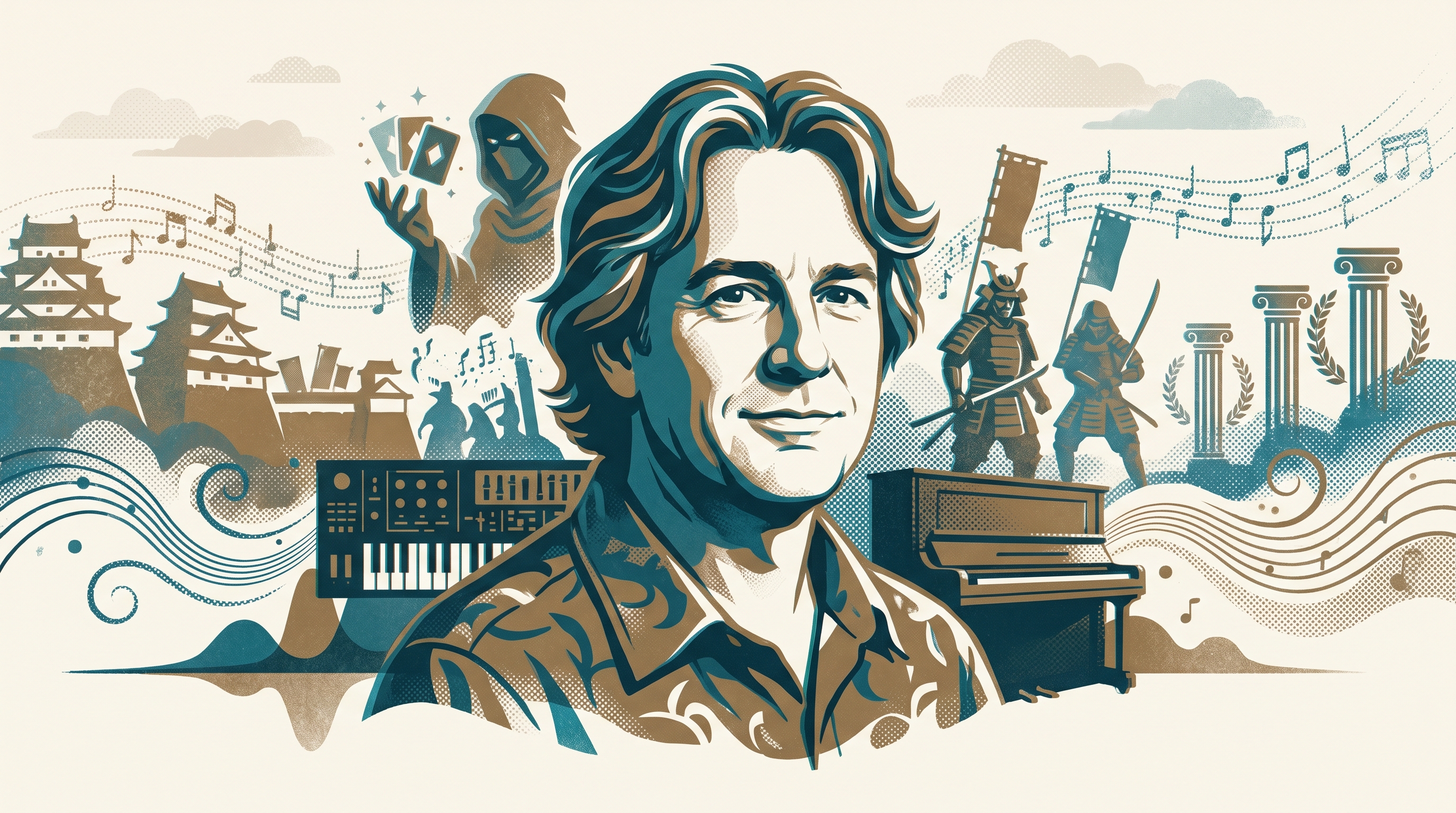
composer
Jeff van Dyck
You don't need permission to take a risk. Experiment, and sometimes the risk becomes the standard.
History
Jeff van Dyck was born in 1969 in Vancouver, Canada. His father, Ralph Dyck, was a composer and technology specialist who brought the boy into recording studios from childhood. Those rooms — the consoles, the microphones, the way sound could be shaped and layered — became his normal. He grew up watching people build music from nothing, and he carried that habit into everything that followed.
In 1992, at twenty-three years old, van Dyck joined Electronic Arts as an audio lead, composer, and sound designer. He was assigned to sports franchises: FIFA Soccer, NHL, NBA Live, and Need for Speed. For the first two FIFA titles on the Sega Genesis, producers requested an Americanised television sound — something close to what audiences heard on The Sports Network broadcasts. Van Dyck listened, then chose otherwise. He wrote a European-influenced techno soundtrack instead. It was a risk. The producers approved it. Fans responded. The choice stuck, and the FIFA sound became synonymous with that style for years after.
He spent five years writing music for sports games. The work was technically demanding — he pioneered interactive music systems that responded to gameplay in real time — but by 1997, the genres had begun to repeat themselves. His wife, Angela, an Australian vocalist who had sung on the first two Need for Speed soundtracks, was also tired of Vancouver rain. They moved to Brisbane, Australia. Van Dyck became a freelance composer. He wanted orchestral work, world music, something with more range. He started looking.
The Creative Assembly, a British developer working on a historical real-time strategy game, needed a composer who could handle Japanese traditional music, orchestration, and ethnic instrumentation. Van Dyck was hired for Shogun: Total War. The game launched in 2000. The expansion, Warlord Edition, followed in 2001, and van Dyck won a BAFTA — the British Academy of Film and Television Arts Award — for the soundtrack. It was his first major award. It was also the beginning of a decade-long collaboration with the Total War franchise.
In 2004, he composed the soundtrack for Rome: Total War. The music mixed orchestral grandeur with ethnic percussion and choral chants in faux Latin — soldiers marching, not to actual words, but to rhythm and intent. Angela van Dyck sang the credits song, 'Forever,' writing the lyrics herself. Saki Kaskas, a collaborator from the FIFA years, played bouzouki and mandolin. The soundtrack was nominated for a BAFTA in 2005. Van Dyck did not win that year, but the nomination confirmed something: he had moved beyond sports games and built a second career in historical and cinematic scoring.
Over the next several years, he worked on Medieval: Total War II and other titles in the series. His role expanded from composer to audio director, shaping not just music but the entire sonic identity of the games he touched. He recorded field sounds, layered environmental audio, and designed interactive systems that made the soundscape respond to player action. The work was invisible when done well — players heard a living world, not a set of triggers — but it required the same attention to structure and flow that his father had shown him decades earlier in those Vancouver studios.
Van Dyck's career spanned rock music in local bands, electronic experimentation in sports games, orchestral composition for historical strategy, and eventually world music that required learning instruments and recording techniques outside the Western tradition. He did not wait for permission to try something unfamiliar. When producers asked for one sound, he sometimes offered another, and when the other sound worked, it became the expectation. That pattern — experiment first, justify later — defined much of what he built. The lesson was simple: you don't need to ask if you're willing to deliver.
Timeline & Works
Career milestones and all 2 games in the museum they worked on — in the order they happened.
- 1969
Born in Vancouver, Canada
Raised in recording studios alongside his father Ralph Dyck, a composer and technology specialist.
people - 1992
FIFA Soccer Genesis soundtrack
For the first two FIFA titles on Sega Genesis, producers requested Americanised TV sound. Van Dyck wrote a European-influenced techno soundtrack instead. It became the FIFA sound identity.
product - 1992
Joined Electronic Arts
Hired at age 23 as audio lead, composer, and sound designer. Assigned to FIFA Soccer, NHL, NBA Live, and Need for Speed franchises.
people - 1994
- 1994
- 1997
Moved to Australia, became freelance
Left EA after five years of sports game music. Relocated to Brisbane with wife Angela van Dyck (vocalist on Need for Speed soundtracks). Sought orchestral and world music work.
people - 2000
Shogun: Total War released
First collaboration with The Creative Assembly. Composed Japanese traditional music, orchestration, and ethnic instrumentation for the historical RTS.
product - 2001
BAFTA win for Shogun: Total War Warlord Edition
Won the British Academy of Film and Television Arts Award for the Japanese-themed soundtrack. His first major award.
milestone - 2004
Rome: Total War soundtrack
Composed orchestral and ethnic score mixing grandeur with faux-Latin choral chants. Angela van Dyck sang and wrote lyrics for credits song 'Forever.' Saki Kaskas (FIFA collaborator) played bouzouki and mandolin.
product - 2005
BAFTA nomination for Rome: Total War
Nominated for a second BAFTA for the Rome: Total War soundtrack. Did not win, but nomination confirmed his second career in historical and cinematic scoring.
milestone - 2006
Medieval: Total War II and expanded audio direction
Role expanded from composer to audio director. Shaped entire sonic identity: music, field recording, environmental audio, and interactive systems responding to player action.
product
Explore the work
Each title has its own page — history, trivia, and collector's notes.
Rooms their games live in
Sources
- Jeff van Dyck - Wikipedia — accessed 2026-06-22
- Bio - JEFF VAN DYCK (official website) — accessed 2026-06-22
- Jeff van Dyck Interview: A Journey Through His Life and Works - VGMO — accessed 2026-06-22
- Game Music :: Interview with Jeff van Dyck (May 2011) - Square Enix Music — accessed 2026-06-22
- Rome Total War 2004 - JEFF VAN DYCK (official) — accessed 2026-06-22