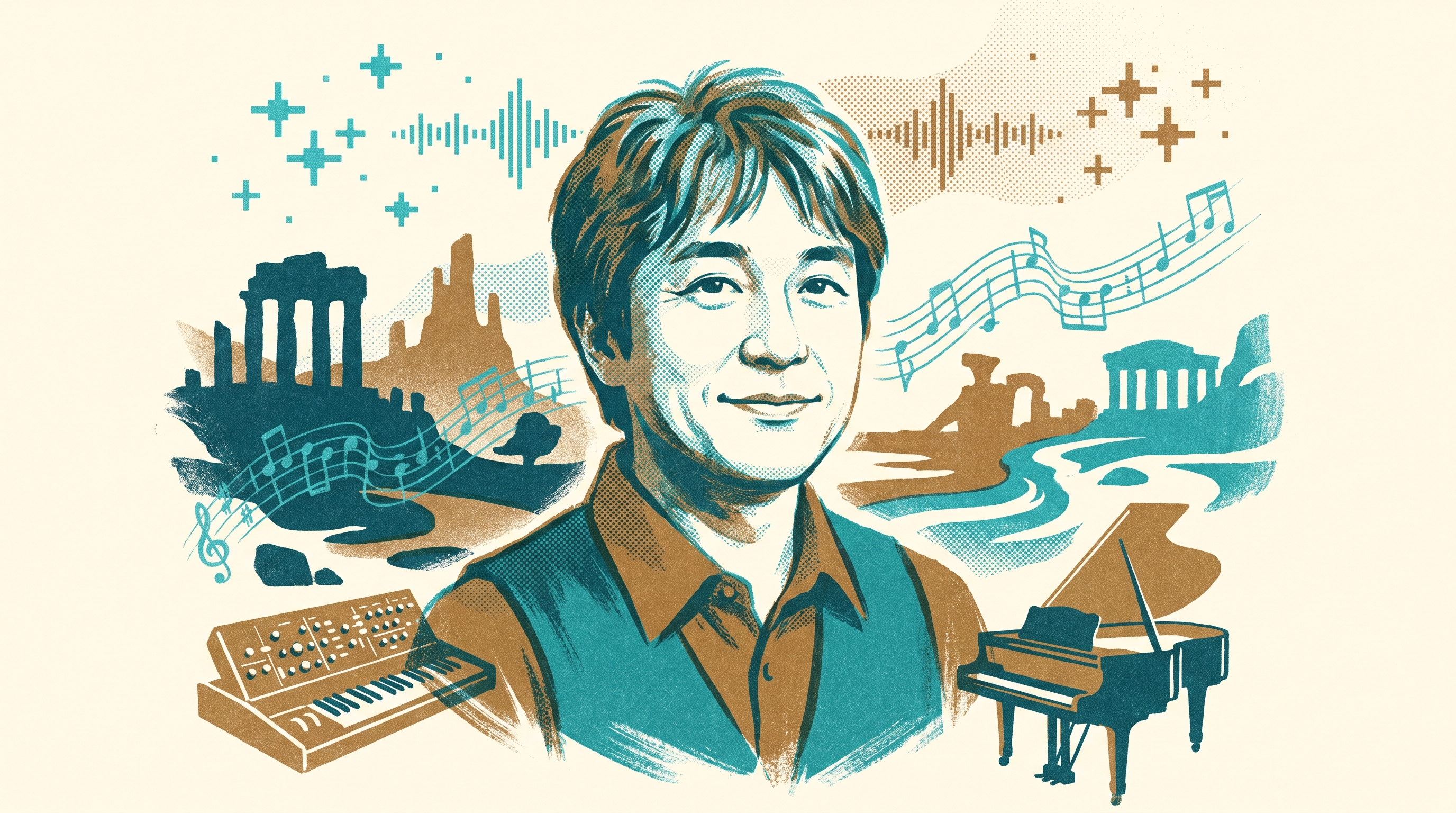
composer
Naoki Kodaka
小高直樹
He spent his spare time in arcades and turned that play into work — proof that what you love can become what you build.
About
Naoki Kodaka is a Japanese video game music composer who worked for Sunsoft from 1985 to 1997. He graduated from Aichi Prefectural University of the Arts with a degree in composition and was hired by Sunsoft after spending much of his spare time in arcades. He is best known for composing the soundtracks for Journey to Silius, Batman (NES, Genesis, and Game Boy versions), Blaster Master, Gremlins 2: The New Batch, and the Albert Odyssey series. After leaving game composition, he became a professor at Daido University and a computer music instructor at Nagoya University of Music.
History
Naoki Kodaka graduated from Aichi Prefectural University of the Arts with a degree in composition in the early 1980s. He had trained in classical composition, but his spare time was spent differently. He frequented arcades, watching the way music worked inside game cabinets — the short loops, the density of melody compressed into limited hardware, the role sound played in shaping the feel of play. He was not trying to become a game composer. He was just listening.
In 1985, Sunsoft hired him. The company was building a catalog of games for the Famicom and needed someone who understood how music could fit inside a system with three sound channels and strict memory limits. Kodaka's formal training in composition gave him structure, and his time in arcades had taught him what game music needed to do. He joined the company and began writing.
His first major work at Sunsoft was the soundtrack for Blaster Master in 1988. The Famicom's sound chip allowed for two square wave channels, one triangle wave, one noise channel, and a small sample channel. Kodaka wrote melodic lines that stretched across those channels without sounding sparse, building density through rhythm and counterpoint rather than layering. The game's music had a sense of forward momentum — urgent without being frantic — and players remembered it decades later.
In 1989, he composed the soundtrack for Journey to Silius, a side-scrolling action game that had originally been planned as a licensed adaptation of The Terminator. The license fell through partway into development, but Kodaka's music remained. The soundtrack is widely considered one of the finest compositions on the Famicom. The bass lines drove forward with mechanical precision, the melodies carried a dark industrial tone, and the whole score felt like it was built from the same steel and wiring as the game's ruined future. It was music that understood what the game was trying to be.
Kodaka also composed the soundtracks for Batman on the Famicom, Sega Genesis, and Game Boy. Each version was adapted to the constraints of its platform — the Genesis's FM synthesis allowed for richer tones, the Game Boy required even tighter compression — but each carried the same clarity of purpose. He wrote music for Gremlins 2: The New Batch, Super Fantasy Zone, and the Albert Odyssey series. Across twelve years at Sunsoft, he produced soundtracks that were functional, memorable, and built to fit the systems they ran on.
In 1997, Kodaka left Sunsoft. He transitioned into teaching, joining Daido University as a professor in the Information and Design Department and later becoming a computer music instructor at Nagoya University of Music. He mentored students in composition, arrangement, and production, passing on both the classical training he had received and the practical constraints he had learned from writing music for hardware with no room for waste. He occasionally composed new music for special events, but his primary work became education.
Kodaka's career is a reminder that the tools you learn on shape what you can build. He spent his spare time in arcades not because he planned to write game music, but because he loved the sound. When the chance came, he was ready. The soundtracks he composed are still studied by musicians and game developers today — not as historical artifacts, but as examples of how to make something clear, purposeful, and built to last.
Timeline & Works
Career milestones and all 3 games in the museum they worked on — in the order they happened.
- 1965
Born in Japan
Naoki Kodaka was born. He would later study classical composition at Aichi Prefectural University of the Arts.
people - 1985
Joined Sunsoft
Kodaka joined Sunsoft as a game music composer after graduating from university. His time spent in arcades had prepared him for the role.
people - 1988
Blaster Master Released
Kodaka composed the soundtrack for Blaster Master, one of his first major works at Sunsoft. The music used the Famicom's limited sound channels to create density through rhythm and counterpoint.
product - 1988
- 1989
Batman (NES) Released
Kodaka composed the soundtrack for Batman on the Famicom, later adapting it for Sega Genesis and Game Boy versions with platform-specific constraints.
product - 1989
Journey to Silius Released
Kodaka composed the soundtrack for Journey to Silius, widely considered one of the finest compositions on the Famicom. The dark industrial tone and driving bass lines became iconic.
product - 1989
- 1991
Gremlins 2 Released
Kodaka composed the music for Gremlins 2: The New Batch, continuing his work on licensed games for Sunsoft.
product - 1992
Super Fantasy Zone Released
Kodaka composed the soundtrack for Super Fantasy Zone on the Sega Mega Drive, adapting to the FM synthesis capabilities of the platform.
productsuper-fantasy-zone - 1993
Albert Odyssey Released
Kodaka composed the music for the Albert Odyssey series, expanding his work into RPG soundtracks.
product - 1996
- 1997
Joined Daido University as Professor
Kodaka became a professor in the Information and Design Department at Daido University, teaching composition, arrangement, and production.
people - 1997
Left Sunsoft
After twelve years at Sunsoft, Kodaka left the company and transitioned into teaching music.
people - 2002
Joined Nagoya University of Music
Kodaka became a computer music instructor at Nagoya University of Music, mentoring the next generation of composers.
people
Connections
- employed sunsoft (1985–1997)
Kodaka composed soundtracks for Sunsoft games across twelve years, working within the strict constraints of early game hardware.
Also connected to
- Keiichi Suzuki co-created Batman: The Video Game
Explore the work
Each title has its own page — history, trivia, and collector's notes.
Sega Saturn · 1996
Albert Odyssey: Legend of Eldean
A strategy series turned hand-drawn fairy tale — then an irreverent English scri…
Family Computer (Famicom) / NES · 1989
Batman: The Video Game
Sunsoft's Batman for Famicom and NES. Wall-jumping, climbing, and a score by Nao…
Family Computer (Famicom) / NES · 1988
Blaster Master
Japan: a soldier defending the Earth. America: a boy chasing his pet frog. Blast…
Rooms their games live in
Sources
- Naoki Kodaka — Wikipedia (English) — accessed 2026-06-18
- 小高直樹 — Wikipedia(日本語版) — accessed 2026-06-18
- Sunsoft Famicom Music – Naoki Kodaka Interview — shmuplations.com — accessed 2026-06-18
- The Best Music Tracks of Sunsoft's 8-Bit Composer, Naoki Kodaka — Stranger Worlds — accessed 2026-06-18
- 小高 直樹 教授|大同大学 — accessed 2026-06-18