The arcade brought home with no compromise — the same board, at the highest price a home console ever asked.
About the Neo Geo
The Neo Geo AES launched in Japan on April 26, 1990, at ¥58,000 — the most expensive home console ever sold at retail. Its hardware was identical to the Neo Geo MVS arcade system: the same Motorola 68000 CPU, the same custom graphics hardware, the same game cartridges. SNK's philosophy was uncompromising: no spec-down version, no compromise with the arcade experience. The AES was initially targeted at hotels and rental businesses and at the most dedicated arcade enthusiasts; its price deliberately excluded the mass market. This purity made it a legend. Fatal Fury, Samurai Shodown, The King of Fighters, and Metal Slug defined the platform — fighting and action games of a quality and precision that console owners elsewhere could only approximate. SNK went bankrupt in 2001, but its founder bought back the intellectual property through a new company, eventually restoring the SNK name and continuing the King of Fighters and Metal Slug series. The Neo Geo is remembered not for its market share but for what it represented: the belief that the right way to bring the arcade home was to bring all of it, exactly as it was.
The arcade, uncompromised. The exact same board, the exact same experience, in your living room.
In 1990, SNK made a decision that most companies would have considered insane: to sell home consumers the exact same hardware they used in their arcade cabinets. No feature reduction. No cost-cutting spec-down. The Neo Geo AES launched at ¥58,000 in Japan — ¥20,000 more than a Super Famicom at launch — and $649 in North America, making it the most expensive home console ever sold at retail. SNK's founder Eikichi Kawasaki had come up through a life that resisted conventional wisdom: from amateur boxing to coffee shop management to civil engineering, before founding what would become SNK in 1978. That background — a man who had built things with his hands and bet on his own belief against received opinion — is legible in every design decision the Neo Geo represents. The machine was not made for the mass market. It was made for the person who had stood at an MVS cabinet, felt what real arcade hardware felt like, and refused to accept anything less at home. It was, as one generation of players remembers it, the 'unattainable flower.' The flower bloomed for those who could reach it — and for those who could not, it remained the standard against which everything else was measured.
— inspired by Eikichi Kawasaki
Design Characteristics
Form & Feel
The Neo Geo AES is a large, heavy console — one of the largest of its generation — finished in black with sharp angular styling that echoed the professional MVS arcade hardware it shared its internals with. The industrial aesthetic was deliberate: this was not a toy. The controller — the iconic Neo Geo joystick — is remarkable for a home peripheral. It is large, weighted, and built to arcade standards, with a four-button layout (A, B, C, D) matching the MVS cabinet layout exactly. A dedicated 'Select' button allowed single-player and multiplayer game selection. Many players preferred to purchase the separate CD-quality joystick for its size and feel, though the standard controller already exceeded most contemporaries in build quality. Cartridges for the AES are large by home console standards — roughly the size of a VHS cassette — because they housed the same ROM boards as the MVS arcade cartridges. Late-era games like Garou: Mark of the Wolves contained over 700 MB of ROM data, giving Neo Geo games a visual fidelity unmatched on any contemporary home console. The Neo Geo CD (released November 1994) replaced cartridges with CD-ROM, dramatically lowering the per-game price from ¥20,000–30,000 to around ¥5,800. The trade-off was load times: the CD version's single-speed drive produced loading pauses that broke the arcade-speed experience the AES had delivered. The CDZ (Japan only, December 1995) used a double-speed drive to reduce load times significantly and is the preferred CD variant among collectors. The Neo Geo Pocket Color (1999) was a separate handheld platform sharing the brand but using entirely different, lower-specification hardware — its games are not compatible with AES cartridges.
Era & Context
The World It Was Born Into
The Neo Geo AES launched in the same year as the Super Famicom — 1990 — but inhabited an entirely different market tier. Where Nintendo was selling family entertainment at ¥25,000, SNK was selling professional arcade hardware at ¥58,000 to a niche of dedicated players. The two products were not in direct competition; they were in the same country but not in the same conversation. The early 1990s were the golden age of the arcade fighting game, and the Neo Geo was the most direct pipeline between that world and the home. When Street Fighter II was igniting gaming culture globally in 1991, the Neo Geo was home to Fatal Fury — a different approach, a different rhythm, SNK's answer to Capcom's dominance. The competition between SNK and Capcom across the decade produced some of the most technically accomplished and deeply played fighting games in the medium's history. Samurai Shodown (1993) was the game that demonstrated the full visual capability of Neo Geo hardware — large, detailed sprites moving with fluid animation, a soundtrack of classical Japanese instrumentation, and a combat system requiring patience and precision rather than reaction speed alone. In arcades, Samurai Shodown gathered crowds; on the AES, it was the flagship demonstration of what the hardware could do. The King of Fighters series, beginning in 1994, became SNK's annual statement — a tournament where teams of three characters from across SNK's entire library (including Fatal Fury and Art of Fighting characters) competed under unified mechanics. KOF defined a community that returned every year for a decade, buying each new instalment to follow the story and the roster updates. By the late 1990s, the Neo Geo was approaching the end of its commercial lifespan — PlayStation and Saturn had reshaped the market — but SNK continued releasing new hardware on the platform. Garou: Mark of the Wolves (1999) is widely considered one of the finest 2D fighting games ever made, and it arrived on AES hardware that was nine years old. The platform extended well beyond its commercial peak through sheer quality of execution.
Engineering
How It Was Built — and Why
The Neo Geo AES shares its hardware platform completely with the MVS arcade system. The main CPU is a Motorola 68000 running at 12 MHz — the same processor that powered the Mega Drive (at 7.67 MHz) and the Amiga (7.09 MHz), but running significantly faster. A secondary Zilog Z80 at 4 MHz handles sound management. The custom graphics hardware can display 380 sprites simultaneously at a resolution of 320×224, with 4,096 colors on screen from a palette of 65,536. This sprite count — 380 — was far beyond what any competing home console could achieve in 1990, and remains the specification most responsible for the Neo Geo's visual superiority in sprite-based games. Cartridges housed multiple ROM chips: a P-ROM (program data), C-ROMs (character/sprite graphics), S-ROM (fixed plane tiles), M1-ROM (music data), and V-ROMs (voice/PCM audio). Late-era cartridges contained over 330 MB of ROM data across these chips, a capacity that allowed near-lossless transfers of arcade artwork that other platforms had to compromise. The Yamaha YM2610 sound chip provides four FM synthesis channels, three square wave channels, one noise channel, and seven PCM channels — a configuration that produced the rich, arcade-quality audio that is one of the Neo Geo's defining characteristics. The AES and MVS are hardware-identical. The AES cartridge shell differs physically from the MVS cartridge, but the PCB inside is the same design. An MVS-to-AES adapter (or a modified AES console) allows MVS cartridges to run on home hardware. This compatibility, in both directions, is the foundation of the Neo Geo's aftermarket ecosystem: MVS cartridges sell at a fraction of AES cartridge prices for the same games, and collectors moving between platforms can do so without duplicating their library.
Design Philosophy
The Belief Behind the Machine
"The right way to bring the arcade home was to bring all of it, exactly as it was."
SNK's philosophy for the Neo Geo was, at its core, a refusal to ask the question 'how much can we take away?' The question that drives most consumer product development — how do we reduce cost to reach the broadest possible market — was not the question that produced the Neo Geo. The question was: 'What would it take to bring the arcade home exactly as it is?' This produced something unusual in commercial history: a product priced out of its apparent market. The AES was priced at a level that excluded most home gamers. And yet it became one of the most beloved and enduring console platforms in history, because the small community it did reach experienced something that no other product offered: arcade purity. The analogy is a Porsche 911 — a sports car that has maintained its essential character across five decades while updating its technology. The Neo Geo's MVS and AES architecture is the equivalent: a platform philosophy that refused to sacrifice the core experience for market expansion. Players who loved what the Neo Geo delivered would return to it — buying each new King of Fighters instalment, attending community gatherings, building the competitive scene — because the thing they loved was not being diluted. Kawasaki's personal history matters here. A man who had come to game development from a life of physical work and independent ventures understood something that pure business logic can miss: that certain audiences — small, passionate, capable of sustaining a culture — will spend extravagantly on the real thing rather than moderately on an approximation. The Neo Geo found that audience. Its bankruptcy was a financial event; its legacy is a cultural one.
Birth Story
How the Neo Geo Was Born
An Unlikely Founder
SNK was founded in 1978 as Shin Nihon Kikaku by Eikichi Kawasaki — a man whose biography reads like a challenge to conventional career logic. He had been an amateur boxer, a coffee shop manager, and a civil engineer before founding what would become SNK. That restless refusal to settle shaped the company's DNA. In the heat of 1980s arcades, SNK made its name with Ikari Warriors (1986) and Athena (1986) — action games that built a devoted audience and established the company as a genuine force alongside Capcom, Konami, and Taito.
Two Systems, One Hardware
The Neo Geo system was conceived as two things simultaneously: the MVS (Multi Video System) for arcades, and the AES (Advanced Entertainment System) for the home. The MVS was a revolutionary cabinet design — a single unit that could accept multiple cartridges from different games, making it easy for arcade operators to swap titles and maximise revenue from a single footprint. The MVS became enormously popular with arcade owners across Japan and internationally.
The Price of Purity
The AES was a different kind of bet. Rather than build a consumer-grade version of the arcade hardware — cheaper, scaled back, 'good enough' — SNK built the exact same board. Same Motorola 68000 CPU. Same custom graphics hardware capable of displaying 380 sprites simultaneously. Same cartridges, interchangeable with the MVS with an adapter. The AES launched in Japan on April 26, 1990, at ¥58,000, and in North America at $649 — prices that placed it entirely outside the reach of ordinary families.
The Synergy Effect
This created a remarkable economic ecosystem. A new game would appear in arcades on MVS, build a following, generate excitement. The most passionate players — the ones who needed to own it — would spend ¥58,000 on an AES and then ¥20,000–30,000 per game cartridge to practise at home. Their improved skills would feed back into the arcade community, raising the competitive level and the overall excitement. The home console, rather than cannibalising the arcade, amplified it.
A Library of Precision
SNK's game library concentrated on fighting and action games of technical precision rarely matched at the time. Fatal Fury (1991) established the multi-plane fighting system. Samurai Shodown (1993) introduced weapon-based combat with a deliberate, reading-heavy playstyle that distinguished it from the speed of Street Fighter II. The King of Fighters series (from 1994) became an annual tournament in hardware form, accumulating a deep roster and devoted competitive following. Metal Slug (1996) elevated the side-scrolling shooter to something approaching animated art.
Bankruptcy and Resurrection
SNK went bankrupt in October 2001. The scale of ambition had outrun the resources — Neo Geo Land, a chain of entertainment venues, had been among the ventures that did not survive. But the company's end did not feel final, because too many people cared about what SNK had built. Kawasaki established a new company, Playmore, and participated in the bankruptcy asset auction — buying back the intellectual property rights to The King of Fighters, Metal Slug, and SNK's other franchises. A company that loved its fans had earned, in its darkest hour, fans who loved it back.
A Legend Without Numbers
The Neo Geo's legacy is not measured in units sold — the AES was never a mass-market product and was never intended to be. It is measured in the standard it set: that 'bringing the arcade home' meant bringing all of it, exactly as it was, without compromise. In craftsmanship, sometimes the resolve to reject compromise and purely believe in your own ideals is what creates a legend that transcends time.
Reflection
What Lasts
SNK went bankrupt in October 2001. The company's ambitions had exceeded its resources, and the Neo Geo's premium pricing had always limited the installed base to enthusiasts. It was, commercially, a failure — a machine that sold to thousands where the competition sold to millions.
But Eikichi Kawasaki, the founder who had come from boxing and coffee shops and civil engineering, went back into the auction. He established a new company — Playmore — and purchased the intellectual property rights to The King of Fighters, Metal Slug, Samurai Shodown, Fatal Fury, and the other franchises that defined SNK's creative identity. He bought them back from the wreckage.
"The people who kept playing King of Fighters were not supporting a company. They were sustaining a culture."
The community that had formed around SNK's games — in arcades across Japan and Southeast Asia, in the fighting game circles that had built entire social lives around the company's tournaments — had not dissolved when SNK filed for bankruptcy. They were still there. Still playing. Still caring.
The Neo Geo AES is remembered as 'the unattainable flower' — the machine that defined what the arcade experience could be in a home, that most people could only admire from a distance. What that distance preserved was not just a console but a standard: that the right way to bring the arcade home was to bring all of it, exactly as it was. That standard outlived the company, the hardware, and the bankruptcy. It is still the measure against which everything else is compared.
Five Things About the Arcade You Could Own
It was the actual arcade hardware, it cost a fortune, it was first meant to be rented, its memory card bridged arcade and home, and it outlived almost everything. Five stories from the Neo Geo.
It was the actual arcade hardware, in your home
Most consoles tried to imitate the arcade. The Neo Geo simply was the arcade. Its home unit, the AES, ran the exact same hardware and machine code as the MVS boards inside arcade cabinets worldwide. There was no downgrade, no compromise, no "good for a home version." When you played a Neo Geo game on your television, you were playing the coin-op, pixel for pixel.
It was the most expensive console of its time
Bringing the arcade home cost a fortune. The Neo Geo launched in 1990 at about $650 — and its game cartridges ran from $200 to as much as $600 each. Adjusted for inflation, that console alone is well over a thousand dollars today. It was never meant for everyone; it was a luxury object for people who wanted the arcade and would pay arcade money to keep it.
It was first meant to be rented, not owned
SNK did not originally sell the Neo Geo to families at all. The home AES began as a rental machine for businesses — hotels, bars, and restaurants that could offer arcade games to their guests. Only when ordinary players started asking to buy the units, willing to pay $650 to own one, did SNK open it up as a home console in 1991. Its first customers were lobbies and lounges, not living rooms.
You could save in the arcade and finish at home
Because the home and arcade hardware were the same, the Neo Geo's memory card worked across both. You could play a game on the MVS machine at your local arcade, save your progress to a card, take it home, slot it into your AES, and pick up exactly where you left off — or the other way around. In 1990, when most consoles had no memory card at all, that was something close to magic.
It outlived almost every console ever made
The Neo Geo refused to die. SNK kept making new games for its arcade boards until 2004 — fourteen years after launch, long after the machine's rivals had been retired and replaced twice over. It remains one of the longest-supported game systems in history: a 1990 machine still receiving brand-new titles in the age of the PlayStation 2.
Before You BuyWhat to watch for, so you don't regret it
The Neo Geo AES is one of the most expensive classic consoles to collect in original condition. Understanding the hardware variants and the MVS ecosystem is essential for making cost-effective purchasing decisions.
Full buying guide →Caring for One You OwnKeeping a vintage machine running
The Neo Geo AES is a robust machine — its industrial-grade construction quality means the hardware itself ages well. The two most common issues after thirty-plus years are the save battery and cartridge contact oxidation, both of which are straightforward to address.
What ages inside a Neo Geo AES
- Save batteryThe 3.6V lithium battery that retains save data and settings will be dead or dying on virtually all unserviced units. This is a standard coin-cell replacement — inexpensive and does not require soldering on most models. Replace before regular use.
- Cartridge slot edge connectorThe cartridge slot accumulates oxidation and debris over decades. Cleaning with isopropyl alcohol resolves most cartridge recognition failures. The gold-plated contacts on AES cartridge PCBs resist oxidation well; the slot itself is the more common failure point.
- Controller microswitchesThe joystick microswitches wear under heavy use. Symptoms are missed inputs or stuck directions. Replacement with standard arcade microswitches is a common and inexpensive repair.
What you can do yourself
- Store cartridges in their shellsAES cartridges are large but their PCB contacts are exposed when unshelled. Store cartridges in their original shells or protective cases to prevent contact oxidation and mechanical damage.
- Clean before useIf a unit has been in storage, clean the cartridge slot and cartridge contacts with isopropyl alcohol before first power-on. Dirty contacts are the most common cause of recognition failures on well-maintained hardware.
The Sounds and Images of an Era
The Neo Geo era produced some of gaming's most visually accomplished titles. These videos capture the console as it was — at launch, in the arcades, on television.
Neo Geo CM Collection 1990–1995
Neo Geo CM 1990 (SNK)
The Neo Geo lands on my bench heavier than any home console should be, its cartridges so thick they read less like storage than a statement. I studied art before I sold machines, and I keep waiting to find a wasted line on this one — there is none. Clean the yellowed shell and a sharp, dignified face comes up out of it. But what I trust most is the inside. When something is wrong on a Neo Geo, the cause usually sits near the surface; the boards are numbered, the layout assumes a human will one day open it, and I revive far more of these than I lose. For years I took that for granted, until I understood the reason. This home machine is not dressed up to look like an arcade machine — it is the arcade machine. The same hardware that ran in game centres runs on my bench, and a single swappable chip is nearly the whole difference between the two; SNK even kept repairing the arcade boards for years after they stopped repairing the home ones. An arcade machine is built for the operator who has to keep it running, because a dark machine on the floor loses money by the hour. That is why it comes back so willingly, and why it still makes such a good sound doing it. Most things now are built to be replaced. This one was built to be found, opened, understood, and put back to work. Even so — no, because of it — I love this machine.
Representative Games
A handful of titles that define this console — each with a shop owner's note, collector's guide, maintenance tips, and memory prompts. The complete library is one click away.
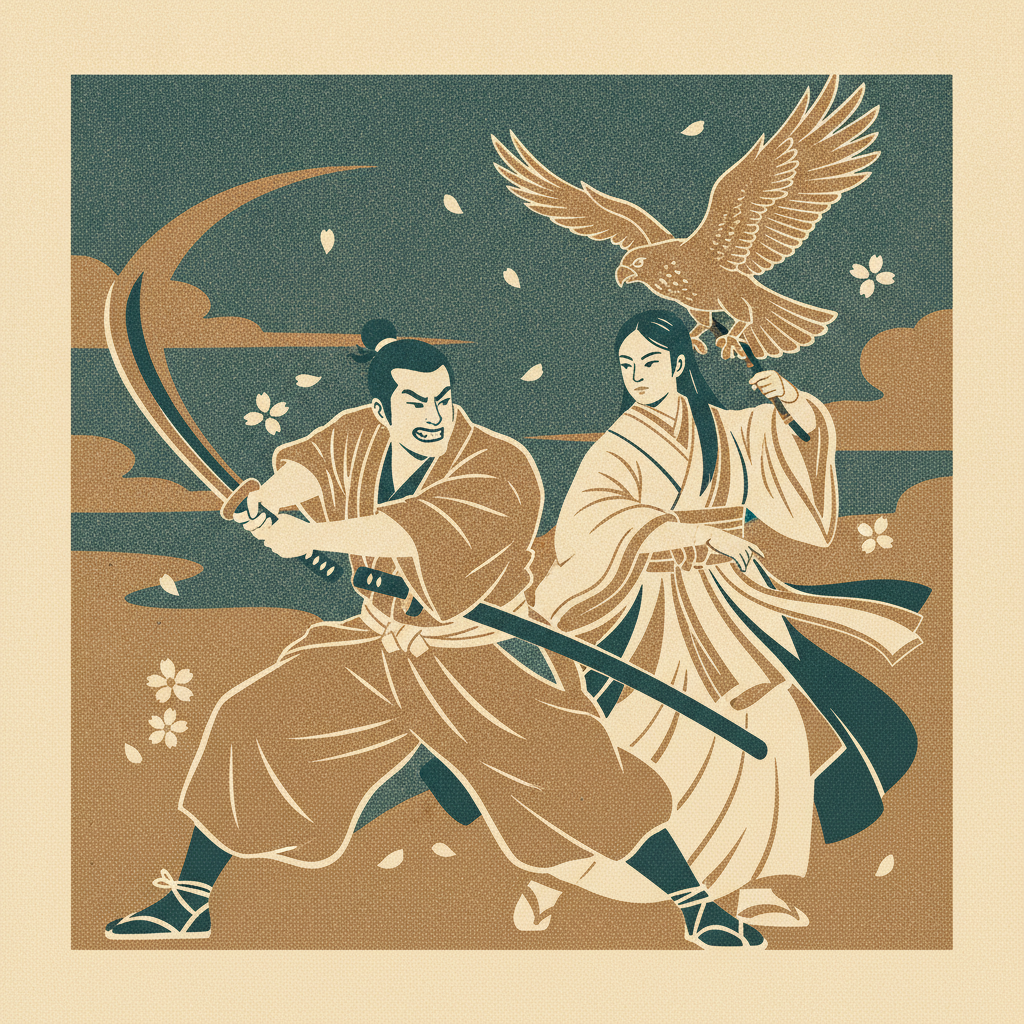
Neo Geo
Samurai Shodown II
真サムライスピリッツ 覇王丸地獄変
Samurai Shodown II is a fighting game for the Neo Geo (1994), from SNK. Part of Enjoy Game Japan Museum's record of Japa…
Read more →
Neo Geo
Fatal Fury 3: Road to the Final Victory
餓狼伝説3 遥かなる闘い
Fatal Fury 3: Road to the Final Victory is a fighting game for the Neo Geo (1995), from SNK. Part of Enjoy Game Japan Mu…
Read more →Neo Geo
Fatal Fury Special
餓狼伝説スペシャル
Fatal Fury Special is a fighting game for the Neo Geo (1993), from SNK. Part of Enjoy Game Japan Museum's record of Japa…
Read more →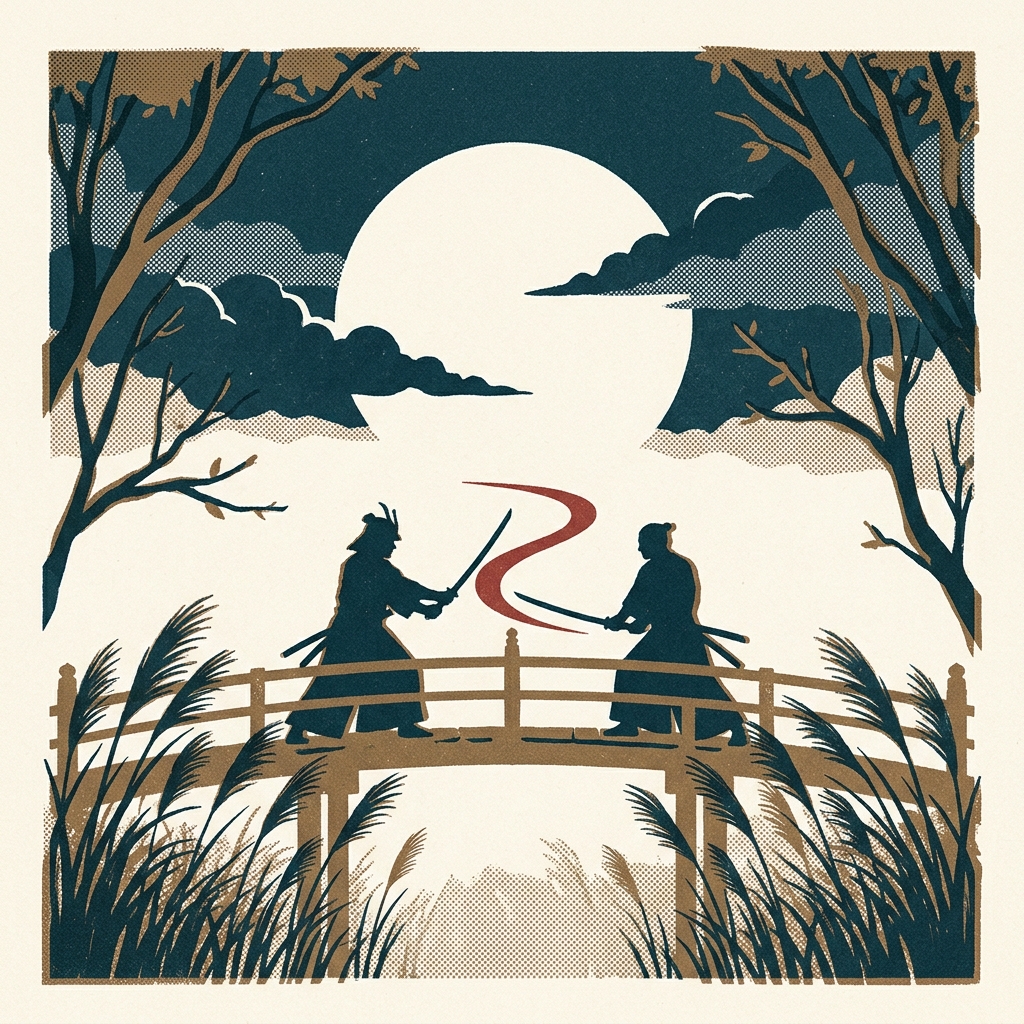
Neo Geo
Samurai Shodown III
サムライスピリッツ 斬紅郎無双剣
Samurai Shodown III is a fighting game for the Neo Geo (1995), from SNK. Part of Enjoy Game Japan Museum's record of Jap…
Read more →Neo Geo
Aero Fighters 2
ソニックウイングス2
Aero Fighters 2 is a shoot 'em up for the Neo Geo (1994), from Video System. Part of Enjoy Game Japan Museum's record of…
Read more →
Neo Geo
Real Bout Fatal Fury
リアルバウト餓狼伝説
Real Bout Fatal Fury is a fighting game for the Neo Geo (1995), from SNK. Part of Enjoy Game Japan Museum's record of Ja…
Read more →Neo Geo — Quick Answers
- When did the Neo Geo come out?
- The Neo Geo AES home console was released in Japan on April 26, 1990, and in North America on August 22, 1990.
- What is the Neo Geo's release date?
- The Neo Geo AES launched in Japan on April 26, 1990. It brought arcade-perfect games into the home — at a premium price that matched its arcade-grade hardware.
- Why was the Neo Geo so expensive?
- The AES used the same hardware and cartridges as SNK’s MVS arcade system, so its games were arcade-identical. The console and its cartridges — some priced over US$200 each — cost far more than rival consoles.
- What is the difference between the Neo Geo AES and MVS?
- The AES (Advanced Entertainment System) is the home console; the MVS (Multi Video System) is the arcade cabinet platform. They run the same games but use different cartridge formats.
- Is the Neo Geo AES region locked?
- In practice the Neo Geo AES is effectively region-free for home cartridges — Japanese and North American AES carts are interchangeable, though the console BIOS differs by region.